Viptamin
Products
About usCartMy OrdersPhoneBlogImprintPrivacy
ProdukteKundenvideosÜber uns

Finally Understanding Carbohydrates – Part 2

Finally Understanding Carbohydrates Part 2

In the first part, we have already summarized what really matters when it comes to carbohydrates. Since this topic is so important for a balanced diet, we’ll shed some light on it for you in this 2nd part.

Our brain has not yet adapted to the large amount of carbohydrates

Walk into a supermarket today and carbohydrates are ubiquitous. Pasta, flour, rice, puddings, sauces, convenience products, sweets, snacks … they’re all dripping with it.

No one has to make any more effort for this. On the contrary, the challenge is to find something without carbohydrates in the mass of food.

So keep your eyes peeled – carbohydrates are among the mandatory information on foods, so after all, it’s easy to look up which food is high in carbohydrates and how.
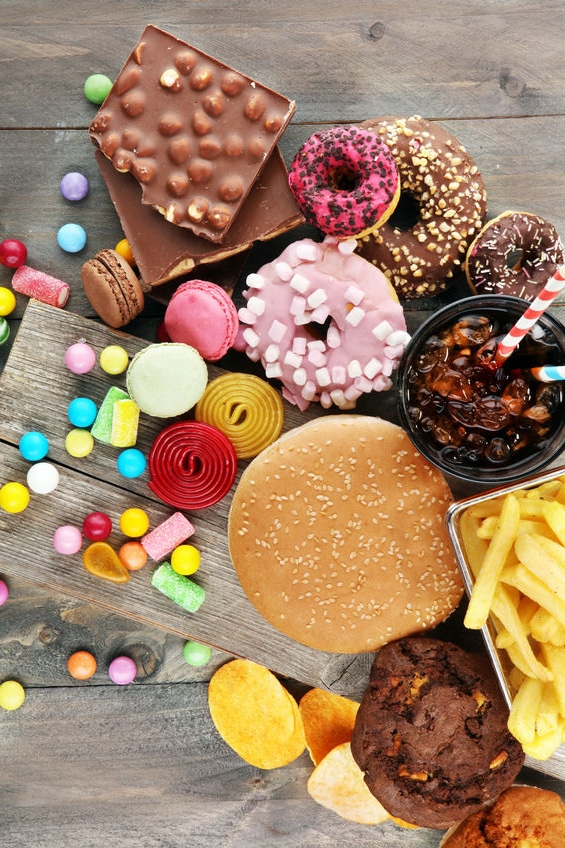
The years-long trend of labeling fats as fatteners hasn’t made it any better. How do you think the diet industry gets food tasty without fat? Of course, with carbohydrates mostly in the form of hidden sugar.
We hardly ever eat food as it comes directly from nature. ” Processed food” is the name given to all foods that have been processed by humans in some way. It starts with ground grain and ends with frozen pizza. This food is bursting with carbohydrates and unhealthy fatty acids. Proteins and vital substances degenerate into a minor matter. The relationship between energy and building blocks gets completely out of kilter.
So it’s not the carbohydrates per se that are a problem, but the excess of them in relation to the good fats, vital substances and proteins.

To combat this carbohydrate power, you will find an assortment of vital substances, proteins and healthy omega 3 fats at Viptamin.

Of course, you can now sit back and wait a few centuries until our brain has adapted to the new conditions and no longer rewards us for eating carbohydrates. Eventually, your offspring will get to the point where you are no longer rewarded for carbohydrate intake with instant feelings of happiness.

Evolution takes time and that’s a good thing, because otherwise every short-term change would basically reprogram us and much of it would have been unnecessary in the long run.

What can you do to improve this situation?

  • Be careful not to consume empty carbohydrates. Just skip the bread, pasta and rice.
  • Instead, replace empty calories with foods that contain carbohydrates along with healthy fats, vital substances or proteins : Nuts instead of chips or vegetables and fruit instead of chocolate. Millet, quinoa or oats instead of wheat. Buckwheat instead of rice.
  • Increase their share of proteins and vital substances: eat more vegetables or legumes, for example. Also, supplementing your diet with our multi-preparations restores balance in your diet.
  • Replace saturated fatty acids with monounsaturated and polyunsaturated fatty acids. Eat more fish and more nuts, use olive oil and canola oil instead of lard or sausages, and reduce animal fats.
  • Dare to experiment and have one meal a day without carbohydrates, preferably the evening meal. This way you relieve your blood sugar level, sleep better and wake up in the morning without hunger.

Viptamin
Purity Law

From 80 € cost
loose shipping

30 days
Right of withdrawal

100% free from
Additives

Excellent
Price-performance ratio

Our blog

Jetzt zum Newsletter anmelden
Ich bin damit einverstanden, dass meine Daten entsprechend den Regelungen der Datenschutzerklärung verarbeitet werden.
Viptamin

Understanding carbohydrates at last

Understanding carbohydrates at last

If you want to know more about how to eat sustainably healthy, you can find a lot of contradictory information, especially about carbohydrates. That’s why we’ve summarized what really matters.

Carbohydrates as a component of our food

If we look at our food, we can divide it into four groups:
Carbohydrates are exclusively pure energy suppliers. Think of them as paper. Paper burns quickly and violently. Can you use well to light a fire. But to make it burn in the long term, you need other substances. In the body, these are fats, proteins vital substances such as vitamins, minerals, antioxidants, trace elements. They build you up and make you strong and capable in the long run.

Vital substances, fats and proteins do not only provide short-term energy. They also provide building materials for our body cells, organs, make happy hormones and build our immune system.
In short, they keep us healthy in the long term.

Aha-knowledge No. 1:

Carbohydrates = Short-term pleasure

In today’s mainstream, almost everything is focused on short-term enjoyment. The mainstream person then also feeds on carbohydrates for the very largest part. Fits. But is that what YOU want? After all, it is the mainstream that is too fat in old age and not those who consciously eat sustainably with vital substances, porteins and healthy fats.

They get the engine running, at full speed, immediately

Carbohydrates = pure energy

Sounds very good at first. We can use energy in our strenuous everyday life. But there is a flip side to the coin.

Our energy consumption is not designed for an excess of carbohydrates in our modern diet.

All carbohydrates are sugars

Carbohydrates are nothing more than sugar in various forms, but in the end they are still sugar. Carbohydrates taste particularly sweet and can be utilized by the body extremely quickly. They are mainly found in convenience foods, bread, pizza, sweets, pasta and fruit. They burn just like paper, fierce, fast and hot.

Unfortunately, even the fructose in fruits is not healthier than other sugars. Vegetables are therefore significantly healthier than fruits.

If we eat these extremely quickly available substances, we feel it immediately. The blood sugar level skyrockets, we experience a real energy boost, which unfortunately is usually short-lived, because the body quickly counteracts. In general, these carbohydrates are delicious but only useful in small amounts.

For a long time, carbohydrates were something special

Carbohydrates are ideal for our glucose-demanding brain, which sets up a tricky reward system to get us to eat them.

Fruits were an important source of energy for early humans. If he could find a sweet piece of fruit, it was high-calorie food and important in times when people didn’t get food from their refrigerators at home but had to work hard for it. Something like that was immediately rewarded by the brain with dopamine, so that as much of it as possible was eaten.

Every time you eat something that contains carbohydrates, your brain releases dopamine and rewards you for it. Eating carbohydrates is pleasant and creates a good feeling. This innate preference has become harmful necessary in modern industrialized countries, as we have far too many carbohydrates in our food supply.

Preventing obesity instead of fighting it

Considering what carbohydrates do in our bodies and the effect they can have on our weight, an Einstein quote comes to mind:

“A wise person solves a problem. A wise person avoids it”

In other words, be wise. When it comes to weight, take precautions right away and avoid overdoing it with carbohydrates. Rather, ensure a balanced diet in which vital substances, fats and proteins play the main role.

Soon we will continue with the second part

If you want to learn more about a healthy diet, the topic of carbohydrates is extremely important. Therefore, there will be a second part on this topic for you shortly. If you’d like to know more and be notified when Part 2 is released, feel free to sign up for our newsletter!

Viptamin
Purity Law

From 80 € cost
loose shipping

30 days
Right of withdrawal

100% free from
Additives

Excellent
Price-performance ratio

Our blog

Jetzt zum Newsletter anmelden
Ich bin damit einverstanden, dass meine Daten entsprechend den Regelungen der Datenschutzerklärung verarbeitet werden.
Viptamin

The benefits of protein are underestimated – part 2

The benefits of protein are underestimated - part 2

In part one, we already reported that protein is the most underrated nutrient in our diet, why its benefits are so great, and how you can best benefit from it. In this second part, we will go over different protein sources, how these proteins differ from each other in quality, and which protein is particularly good and tolerable for the body.

Important: the source of protein

You should definitely be clear about where proteins come from. Depending on the animal or plant source, the amino acid profile of proteins differs. Proteins from slaughterhouse waste, while very favorable to manufacturers, may be contaminated with pathogens and contain drugs and hormones. Low quality whey protein (Whey) can lead to acne and fatigue. Inferior proteins of animal origin can cause elevated blood pressure, increased risk of type II diabetes, increased risk of bone fractures, and kidney stones. Bovine Meat and Milk Factors (BMMF) have been found in conventional cow’s milk, which can cause chronic inflammation and increase the risk of colon and breast cancer. That is why we rely on organic quality.

I estimate that currently not even 0.1% of all protein powders on the market come from controlled organic production.

Vegetable or animal protein?

Vegans and vegetarians prefer plant-based products, which can also be good sources of protein. However, such carry the risk of being contaminated by pesticides or genetically modified. In addition, the vast majority of plant proteins lack an essential amino acid.

Vegetable proteins are generally less efficient, but they are by no means inferior.

Origin also counts

Products from distant countries should be viewed critically if the origin, treatment and breeding of the raw materials cannot be traced. There, regulations and controls regarding the use of antibiotics and pesticides as well as production methods are much less strict. An EU organic label provides assurance that controls are actually in place. We are also regularly inspected by an inspection body for EU certification.

Quality through unique methodology

In order to obtain a product of maximum purity and optimal effect, we have used 2 special techniques in the production of Organic Alpine Protein:

Cross-flow ultrafiltration mimics human cell membranes through the ultra-fine pores of the filters. In this way, only valuable nutrients pass through the membrane, while a large proportion of harmful substances, unnecessary fat and lactose are optimally filtered out.

Cold processing of proteins ensures that the proteins retain their natural form and function. Heat would destroy their three-dimensional structure and render them largely ineffective.

Overall, our product offers clear added value that you will not find on the market in this combination.

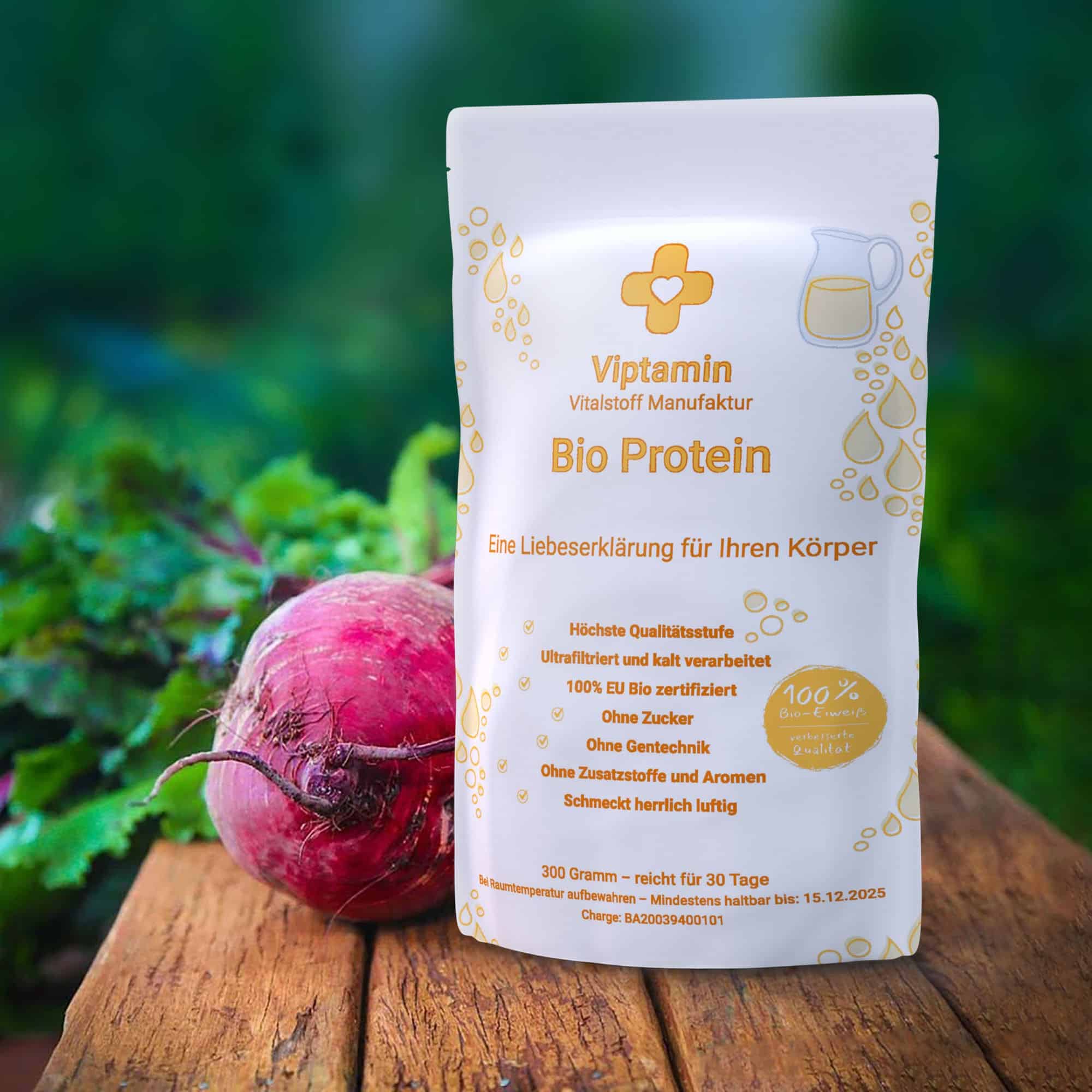
Bio_Protein

The organic protein from Viptamin

Our organic alpine protein clearly stands out against conventional products. It:

  • comes from controlled organic skimmed milk from the Austrian Alps (EU organic certified)
  • Contains an optimal amino acid profile with high valence
  • contains amino acids for the formation of glutathione, the strongest antioxidant in our body
  • Contains amino acids that contribute decisively to muscle building
  • Is of exceptional quality and purity
  • is free from additives, such as flavors, preservatives and sugar
  • was completely freed from possible harmful substances, lactose and fats
  • was processed with care for protein

Viptamin
Purity Law

From 80 € cost
loose shipping

30 days
Right of withdrawal

100% free from
Additives

Excellent
Price-performance ratio

Our blog

Jetzt zum Newsletter anmelden
Ich bin damit einverstanden, dass meine Daten entsprechend den Regelungen der Datenschutzerklärung verarbeitet werden.
Viptamin

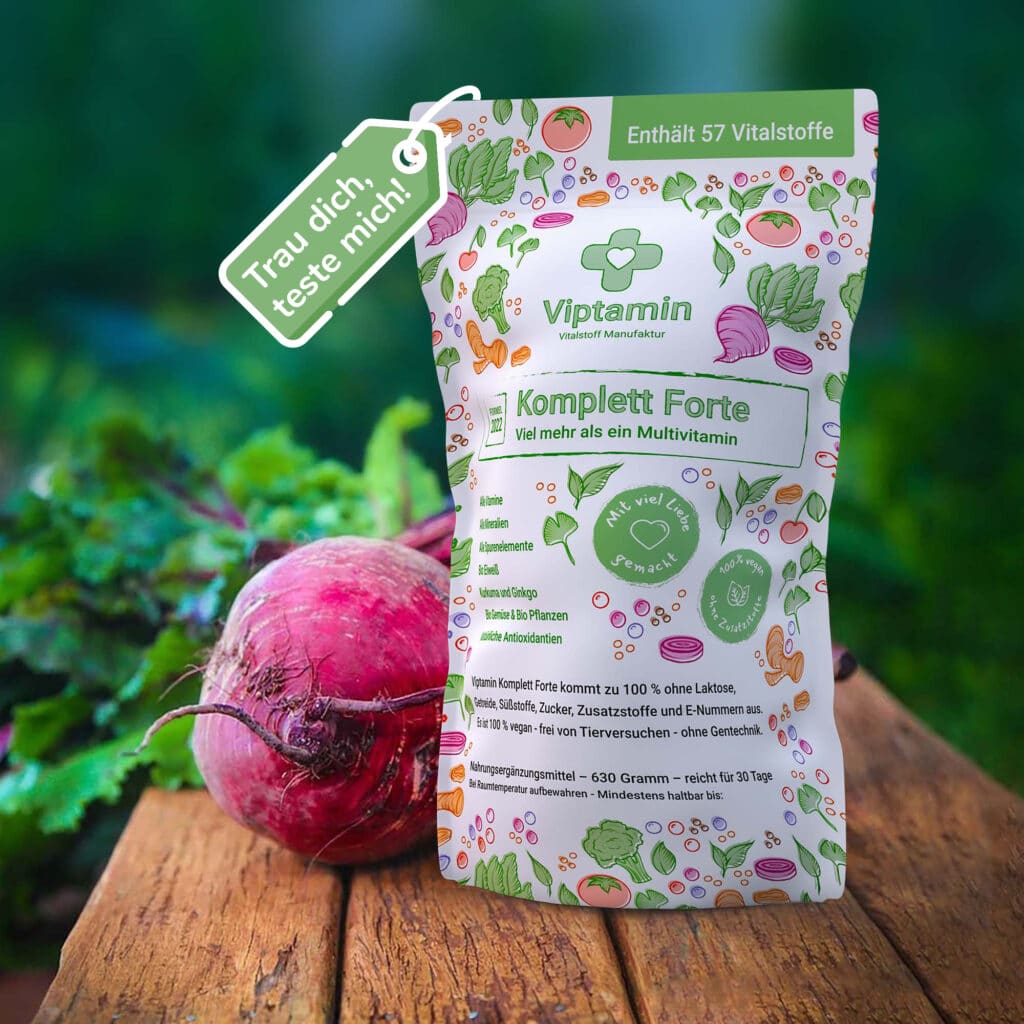
Ihr Mehr-Wert mit Viptamin Komplett Forte

Wir haben nachgerechnet: Wenn Sie alle in Viptamin Komplett Forte enthaltenen Vitalstoffe einzeln bei Amazon kaufen würden, dann müssten Sie fast doppelt so viel zahlen.
Inhaltsstoff Menge pro 22g-Messlöffel Preis bei Amazon
Bio Reisprotein 8g 0,216 €
Vitamin A Palmitat 900 μg 0,809 €
Thiamin 40 mg 0,149 €
Vitamin B2 50 mg 0,028 €
Niacin 77 mg 0,027 €
Vitamin B6 15 mg 0,019 €
Folsäure 800 μg 0,033 €
Vitamin B12 250 μg 0,019 €
Biotin 340 μg 0,015 €
Pantothensäure 50 mg 0,015 €
Vitamin C (basisch) 800 mg 0,611 €
Vitamin D3(100% vegan) 50 μg 0,021 €
Vitamin E (100% natürlich) 134 mg 0,073 €
Vitamin K1 100 μg 0,090 €
Vitamin K2 (MK7 aus nat. Natto) 100 μg 0,027 €
Magnesium 418 mg 0,108 €
Kalzium 335 mg 0,018 €
Kalium 400 mg 0,325 €
Zink 20 mg 0,177 €
Mangan 2 mg 0,032 €
Selen 200 μg 0,087 €
Kupfer 1 mg 0,050 €
Chrom 80 μg 0,058 €
Methylsulfonylmethan (MSM) 500 mg 0,661 €
Lutein 20 mg 0,311 €
Acerola Kirschen natürlicher Extrakt 50 mg 0,012 €
Acai Beeren natürlicher Extrakt 50 mg 0,006 €
Aronia Beeren 50 mg 0,002 €
Cranberry Früchte 50 mg 0,006 €
Rote Bete biologisch 2600 mg 0,233 €
Brokkoli biologisch 500 mg 0,016 €
Kohl biologisch 500 mg 0,133 €
Kurkuma 800 mg 0,019 €
Sägepalm Extrakt 50 mg 0,014 €
Ginkgo Extrakt 50 mg 0,019 €
Grüntee Extrakt 45% ECGG 50 mg 0,011 €
Zitrus Bioflavonoide 70 mg 0,013 €
Quercetin 50 mg 0,028 €
Hesperidin 15 mg 0,020 €
Rutin 10 mg 0,004 €
OPC aus Traubenkernextrakt (95%) 50 mg 0,013 €
Resveratrol 50% 10 mg 0,014 €
Lycopin aus Tomaten 20 mg 0,432 €
Astaxanthin Komplex 3 mg 0,125 €
Tocotrienol Komplex 20 mg 0,141 €
Acidophilus, Thermophilus, Bifidus, Bulgaricus 250 mg 0,111 €
Cholin 10 mg 0,003 €
Beta Glucan 200 mg 0,089 €
GESAMT Kosten pro Tag: 2,82€

Kosten pro Tag: 5,44 €